Optimism—Might as Well Have It

flags.jpg

Update on 1/19/19:  My memoir, Angels in the OR: What Dying Taught Me About Healing, Survival, and Transformation, can be pre-ordered now. It is a #1 new release in several categories.  I would love it if you helped me make near-death experiences more mainstream.

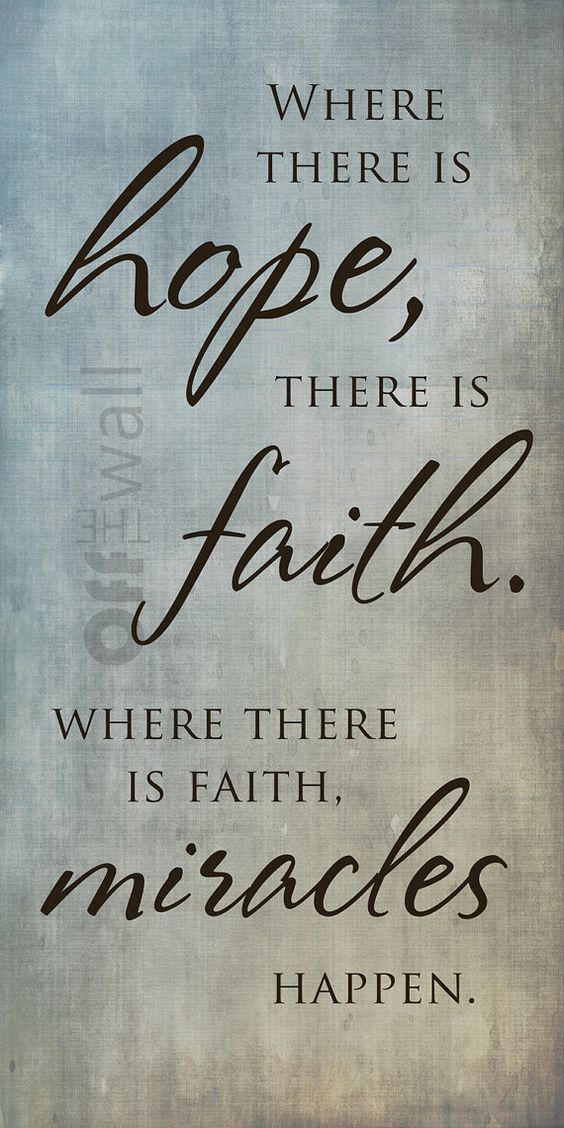
Hope is the only thing that matters because it points to the inevitable.—Pam Grout

Today, I watch my prayer flags blowing in the wind and remember a time in my life when I was ridiculously optimistic.  I was eighteen and close to graduating from high school.  I hadn’t received any scholarships yet, but I visualized money flying into my mailbox on a magic carpet ride.  Thousands of dollars did indeed arrive, and I knew those checks sealed my fate.  I would be leaving East Texas and never returning.  I took pictures of my ramshackle of a home to remember it.  I captured the sinking floors, the sinking roof, and the black mildew covering the walls.  I captured the peeling wallpaper, the wood panel, and the mouse droppings. I grew up poor, ridiculously poor, like Walmart was too good for us kind of poor.  Poor like I rolled up white bread and ate it slowly when the hunger pains hit.  Poor like I wished my parents weren’t proud and would’ve applied for welfare so I could eat free school lunches.  I envied the kids eating warm breakfasts in the cafeteria.

I wore clothes from garage sales and was picked on unmercifully in late elementary school and early junior high.  Girls called me ugly, disgusting, and worthless.  When I look back at the pictures, I was adorable, a little malnourished and underdeveloped but worthy of love.  All kids are worthy of love.  My innocent heart and compassionate nature was lovely.  I liked all people in an open-hearted way.  I didn’t understand why my love wasn’t often returned, but I realized that was probably more about them than about me.  I didn’t understand why my parents hated each other and didn’t get divorced.   I didn’t understand why I had to observe mom hurling abuse in dad’s direction and dad ducking out the door and coming back late at night.  He never came around much during the evenings other than to shower and head out again, only saying, “Keep up the good work in school, kiddo.”  At least he said something nice.  Sometimes, that phrase would be the only kind thing I heard all day.

Most nights, dad stayed away from the house until 10 or 11 p.m.  On weekends, he went on fishing trips.  When he wasn’t around, mom generally yelled at me for minor reasons, threatened suicide around 5 p.m., and went to bed around 6 p.m. At first, I tried to find help for her by asking a few friends parents about therapists or ministers, but she refused all help.  She wasn’t always unstable, but many times I felt scared for her.  I was unable to help her in those moments because I needed parenting myself and a peaceful place to live. I didn’t have siblings and there weren’t any kids in my neighborhood to hang out with.  I was alone except for the phone and the moon and the stars.

However, my life situation didn’t matter much to me on most nights.  I had a connection to nature, books from the library, and so much freaking optimism. I had the optimism of a rocket not afraid to leave the earth’s atmosphere.  I wrote poems late into the night.  My future felt like a wild ride, and I was a racecar driver.  I left East Texas a week after graduation with unlimited optimism.  Whatever life had given me didn’t matter.  I was a live wire, a magician, and a song writer.  My life was my song.

I wish I could bottle the enthusiasm of that eighteen-year-old girl.  I wish I could make it into a magic, everlasting elixir and give it to everyone.  It didn’t matter that life would crush me in a hundred different ways after that moment.  It only matters that I dared to dream.  I dared to try.  I shot for the stars and made it to a few mountaintops around the world.  Hope doesn’t have to be reserved for the young.  Hope is a gift we give ourselves because we love ourselves despite our life situations or challenges.  Hope is a gift we give ourselves in order to rise above and beyond what is going on around us.  Hope means loving yourself enough to get excited about what comes next.

Eventually, my mother left my father and created a better life for herself by looking to new horizons and taking chances.  My father died eight years ago, but he died better and more optimistically than anyone that I have ever witnessed or read about.  He didn’t try to hang on desperately to his dying body.  His soul grew large, and he met death with curiosity, ready for his next adventure and solidly certain that his soul would go on.  To this day, I still get communications from him. 

Today, I am excited about what comes next, not exactly in the same way that I was excited at eighteen but excited. This excitement comes from not bothering to turn my head back into the past.  My head is on straight, and my sight is set on the next horizon.  Each setting sun is a prayer flag waving back at me, a blessing giver throwing confetti.   I am my own beacon of light, and I’m not lost at sea.  My ship has docked in a fabulous port.  I know there’s spicy food at a restaurant nearby, and I like my food very spicy.  I can afford desert as well.  I’m in my own commercial, and I’m sold on the life that life is giving me.  Everything is turning out beautifully.  Better than I could’ve imagined.  I wish this for everyone.  Hope and so much freaking optimism.
 

hopefaithmiracles

Just Say “No” to Other People’s Negative Energy: Love Yourself Enough to Just Do It! (Particular Advice for New Teachers and Professors)

butterfly

In this wonderful video, “How to Stop Absorbing Other People’s Energy,” Ralph Smart details five ways to deal with negative energy from others.  I’ve listed those ways below.


As a former public school teacher and college professor, I inherently know how to deal with negative students and parents and redirect negative people very quickly in different directions, sometimes even transforming their anger or negativity into a talk about what is really going on in their lives to make them lash out at me or others.  Other times, they are sent in a different direction all together so that I can focus on others who are willing to learn and grow.  Ralph Smart’s responses make sense to me, and I incorporate most of these techniques automatically in the classroom.

Each situation with a negative person requires a slightly different response and a different set of skills, but the main point is that negativity doesn’t get to win. I won’t let one student’s negativity detract from my mission from the light.  I wasn’t sent back to earth after my NDE to let negativity interfere with the light and my mission.  I am meant to shine light into my own life and the lives of others.  My guides don’t let negativity win, and I don’t let it win either.  At a basic level, I must help my students become better communicators, thinkers, and writers.  On another level, I have an intent to help others feel better about themselves and achieve their personal goals.

I don’t talk about the negative students in the lounges and with other professors unless I want input on how to more effectively deal with a troubled student and think someone I know can offer sound advice.  I don’t complain about students and spend my energy in that way.  I talk about the students who inspire me with their drive, ambition, and ability to persist despite adversities.

The Five Ways Ralph Smart Recommends for How to Stop Absorbing Other People’s Negativity:

  1. You can’t please everyone. Everyone is here for a different reason. There is nothing wrong with being nice, but it’s more important to be yourself.  When you trust yourself, you are loving yourself and accepting of yourself 100%.  If others don’t like it, they can hit the road.  (As a teacher, realize that every student will not appreciate your style of teaching, your content, or your ideas. Realize that you are there to reach who you can on a deeper level and to help every one of your students succeed whether they like you or not.  Things generally run smoothly if you take this approach.  And remember the ten second rule.  Students make judgements about you in the first ten seconds they see you.  Smile, hold your head high, look in control, and ask certain students informal questions before class starts to show that you care about them.)
  2. Choose whether you want to be invited where this person will take you.  No one can enter your world without an invitation.  We are consciously and unconsciously inviting others into our temple which is ourselves.  (Pay more attention to the students who are doing things right–learning, growing, and participating.  Those who are working as a distraction need to be dealt with in various ways.  Extroverted students can be fun, and if you make room for discussion in your classroom, give them specific ways to talk about the content.  Engage with them during discussions.  Negative distractions should not be invited into your consciousness for long.)
  3. Do not pay attention.  Some people can be classified as energy vampires. A parasite can only live on the host’s body.  Whatever you focus on grows.  Energy vampires work by making you think of them.  Just the thought of them alone is tiring.  Pay attention to where you pay attention.  Are you focusing on what you want or on what you fear?  An “emotional drive by” is when someone dumps their negative energy on you and then drives off.  Don’t become a trashcan for someone else’s garbage. (Know what your purpose and intent is in the classroom.  Don’t let your focus waver from the goal of helping and inspiring others.  For example, one of my intentions is to give my students new ways to think and to give them the light and peace that comes from loving oneself and believing in oneself.)
  4. Breathing increasing the blood flow.   Just going into nature can purify your senses.  Meditate, dance, sing, and heal.  Become like the butterfly.  It is light and moves around quickly, not absorbing others energy.  Keep your head up and pay attention to your body language.  Becoming lighter is the only way to fly.  Keep it moving. (Consider teaching mindfulness in your classes or let your students research ways to decrease stress and increase joy in their lives.  You can also invite someone into your classroom to teach mindfulness if this is not your area of interest. On nice days, I sometimes conduct class by the river or outside somewhere.  I always recommend nature to heal our bodies, minds, and souls.)
  5. Take responsibility for your internal condition. Ask yourself, “How do I feel?”  To stop absorbing other’s energy, you must realize that you should take care of how you feel at any given moment in the day.  What you fight, you give energy to.  Everything is based around perception.  The perception we have of ourselves is greater than the perception others have of us.  That is the secret.  Once you change your perception, you change your reality.  No one has power unless you give them power.  Fly past other people and let go of fear. (Know that with the intent to help others in the classroom, you will generally feel GREAT.  All of your problems will evaporate the minute you step in the classroom ready to be a force of goodness and work for the benefit of others.)

As a teacher, you have control over the flow of energy in your classroom.  If you make it known that you are there to work for the benefit of all your students, you usually gain their respect, even if this takes a while.  Everyone has a different teaching style.   You don’t have to make yourself into someone you are not. I’m not an authoritarian, but I deal with problems quickly.

I hope every new public school teacher and college professor has a team of administrators who support them. Years ago, when I did my student teaching, I taught an eleventh grader who abused drugs and sometimes walked on desks at random.  I immediately moved his desk outside and asked him to step outside.  Long term, I preferred that he get the help he needed somewhere other than my classroom.  When I talked with the principal and suggested an alternative school, he looked at me with a smirk and said, “There isn’t room in the alternative school, in ISS, or detention.  You’re going to have to deal with him yourself.”

This might’ve been an initiation of sorts, but I didn’t appreciate his lack of support.  I dealt with the student in two different ways.  By a stroke of luck, I ended up on a city bus with the student, and he looked smaller and more afraid amidst a crowd of adults.  A friend of his was making fun of how little he knew about history, so I first taught them both a few memorization skills.  Secondly, I confronted his actions and said, “I know you are planning on dropping out of high school.  You don’t take school seriously and have a zero in my class.  When are you dropping out?”

He looked startled and told he was wasn’t sure when. I told him that before he dropped out, I wanted him to take this test using the memorization skills and see if he could pass.  I asked him to write one serious essay in my class and receive my comments.  Amazingly, he agreed. He passed the history test and wrote a surprisingly creative essay for my class.  I praised his writing and told him that the GED was always an option if he dropped out.   We talked about alternative careers as well that didn’t require a degree, but I let him know he had the ability to do well in school.

He never walked on desks or interrupted my class again once I focused my attention on what he was doing right and could do right.   Eventually, on the days he planned on being a disruption, he moved his own desk outside of my classroom so I could teach the other students.  This student was kicked out of school after a fight, but I think about that essay he wrote, and I remember the positive moments of our interaction way more the negative.

Sometimes, dealing with a negative person means finding something they are doing right and focusing on that and making that grow in their lives.  Sometimes, dealing with a negative person means not dealing with that person at all.  In good school districts, I had administrators who handled negative, disruptive students in loving but firm ways.  They gave consequences for bad behavior and reeducated these students.

In society and in schools, rules and those who enforce rules are very important.  Schools run better with great administration who care about students, and societies run better with understanding but firm police officers and enforced laws.  With this kind of help from administration, teachers can focus on all the many amazing, positive students in their classrooms, and people in the world can live their lives in peace.


Takeaways from The Afterlife of Billy Fingers: Part II

newmexico

Higher Beings/Angels:  Annie Kagan’s translations of Billy’s experience in the afterlife makes for a moving and uplifting book.  Billy’s descriptions of the Higher Beings/Angels ring true for me.  As an NDEr, I have struggled to translate the experience of coming in close contact with two of the most intelligent, large, amazing beings I have ever encountered.  By default, I have called them angels, but Higher Beings seems an accurate term as well.  I got the sense that other people might have different Higher Beings as their guides, but the qualities that my protective angels/Higher Beings exhibited most were intelligence, compassion, and healing powers.  They healed me through the backs of my surgeons with their light, and I had complete faith in their healing abilities.

Perhaps at different times in our life, different angels and guides show up for us.  In Kagan’s book, Billy describes the Higher Beings as, “Whatever qualities come under the heading of benevolence, that virtue is right there in the light.  It’s different with these Higher Beings.  They’re more specific, more personal, like the Divine Presence is focused through a prism.  And the colored rays that come through the prism—these are the higher beings.”  I resonate with that description because my Higher Beings were indeed specifically focused.  Perhaps at different times in our lives we might require differently focused Higher Beings.

Toward the end of the book, Billy says, “There’s an impersonal quality to these Supreme Beings, but that’s not a negative—it’s a big plus.  There’s a pureness to it.  This is what I’ve imagined being in the presence of God would be like….They are pure Spirit.  Just as our bodies are the carriers of our souls, our souls are the carriers of our Spirit.”  For me, this description helps add clarity to my interactions with my angels during surgery.  They were pure Spirit, pure benevolence, and put me at ease outside of my body immediately with telepathy and strength.  I knew I would be fine whether I stayed in the environment outside of my body or returned.  For me, all signs pointed to returning, but I got the sense that everything would have been beautiful, pleasant learning experience for me had I not returned.

Nature:  One of my other favorite lines in this book is a simple but true message reading, “Nature has more light than anything else on your planet.”  In the book, Kagan takes Billy’s advice and returns to nature for healing, inspiration, and connection.  All of us need the healing power of nature in our lives.  Technology is a powerful connector, but not healing in the way that being in nature is healing.  When I am broken, I go to the mountains and let the mountains give me their strength.  When I am stressed, I go to the ocean and let the waves wash away my pain and troubles.  When I want fun, I head to nature.

At another point in the novel Billy says, “The best cure for suffering?  An enlightened experience of it all.  What does that mean?  It means finding the invisible within the visible.”  Nature is a great place for people to experience enlightened moments.  Looking down from a high peak at a city helps us put everything in perspective again.  We are a small part of the whole, but our enjoyment of our life is key.  Nature keeps us present and helps us enjoy our lives more fully and even sometimes catch a glimpse of the invisible within the visible.

newmexico2

Addiction:  (Spoiler Alert) Billy’s struggle with addiction and even his death as an active addict did not prevent him for any of the bliss, compassion, or benevolence on the other side.   Life’s purpose and a particular soul’s purpose can be grand on the other side while looking rather shabby on this side. One of the more important lessons I took away from my NDE was that the shadows I danced within during that time in my life (the drugs and alcohol) only prevented me from living more fully and connected to others at times.  I wasn’t judged by the light.  I was met with deep compassion and love.  Maybe if I would’ve stayed in the environment outside of my body longer, I might have seen how my life looked from a musical perspective—the ups and downs, the crescendos, and the drumrolls.

In recovery, people are sometimes shamed for relapsing, and there is so much disappointment around the deaths of addicts.  As an NDEer, I sometimes have a different perspective and see the struggle for sobriety as more of a dance the way Billy described it. I see those who relapse as in need of more compassion and care, not less and definitely not condemnation.  The other side greets us with compassion.  Part of our lesson on this earth plane seems to be finding a way to take everything a little less seriously, to let go of resentments quickly, to forgive ourselves and others instantly.  As Billy says, “…there is no one to forgive, because we signed up to do this dance together before we were born.  We weren’t acting out some type of I-did-something-wrong-to-you-in-another-life-and-I’m-paying-for-it-now kind of thing.  It doesn’t really work like that… It’s more a kind of experiment chosen for soul-type reasons that humans have an almost impossible time understanding.  And not understanding is an important part of the experiment.”

If there is one criticism I have of the book, it is that there is not a lot of description of how the oneness occurs.  During my NDE, I saw from the perspective of others in my life review.  That part of the life review for most NDEers shows us where we have hurt and disappointed others, not as a form of punishment but as a way to fully understand our roles and the perspective of others.  I know that there is much compassion on the other side, but the ways we harmed or hurt others is something worth noting in the life review process.  The ways that we harm ourselves are only pitied, but in my experience the light seemed to wish that I could love myself more and open up to others more frequently.  I appreciate the compassion and benevolence described and know this is correct.  There is a bit of “relearning” about our roles that goes on outside the body.  Mabye this could have been explained a bit more.

However, this is actually a minor detail.  The book as a whole is a fantastic read.  I loved it and highly recommend this beautiful, unusual, uplifting book.

newmexico3

Inspiration Friday: 39 Secrets to Happiness and Peace

I enjoy coming across amazing bloggers on WordPress. This list inspires me. I hope it inspires you as well.

Stacy Rancourt's avatarStacy Loves...

We’ve all heard that happiness is a choice, and that is true.  It is not what happens to us, but our attitude and the way we react to situations that will determine our happiness.  Here are a few “secrets” I have discovered so far in my 39 years that have led me to a life filled with happiness and inner peace.

attitude of gratitude

1.  The attitude of gratitude will ALWAYS bring you happiness.  Find something to be thankful for.  We are all constantly surrounded by so many gifts and blessings.

2.  View every encounter and experience as a gift.  Even the seemingly bad situations are a gift in the end.  Try to recognize and appreciate these gifts every day.

3.  Be kind to everyone, but spend the majority of your time with like-minded, positive people who are also committed to improving their personal and spiritual growth and are willing to support you…

View original post 1,102 more words