What is unique about a near-death experience is that this awakening often happens to people who were not seeking it.
A near-death experiencer may or may not have interest in spirituality before the event, yet they frequently return with a profound sense that consciousness continues beyond death and that reality is far larger than materialistic views.
For me, the experience was life changing. In a matter of moments, my understanding of life expanded beyond anything I had imagined possible.
Returning to ordinary life was both beautiful and challenging. Part of me was grateful to be alive and eager to continue my education. Another part of me could never forget what I had witnessed. I was obsessed and read countless books about spirituality while recovering from my accident. When I returned to college, I did not have the same interests or insecurities. I had so much more gratitude and a feeling of being connected to everyone and everything.
One of the strongest impressions I carried back was the importance of love. That sounds simple until we attempt to practice it. It is easy to love people who agree with us or treat us well. It is much harder to respond with wisdom, compassion, and healthy boundaries when faced with fear, anger, or aggression.
Love is not passivity. Sometimes love means protecting the vulnerable. Sometimes it means preventing harm. Sometimes it means holding a vision of healing for those who have been wounded. Love is both an action and a state of being.

I am not suggesting that near-death experiencers return as enlightened beings. We come back with personalities, emotional wounds, and challenges just like everyone else. Yet, many experiencers do return with a deep awareness that there is more to life than achievement, accumulation, or survival.
The moment I left my body, I knew that consciousness continued beyond physical death. I encountered a reality that felt more vivid and more “real” than ordinary life. Through direct experience, I understood that we are connected to something far greater than our individual identities.
No matter what happened afterward, I could never unknow that.
From that perspective, many of the things that consume us here appeared far less important. The struggles, fears, and disappointments that seemed so significant in life faded into the background. What remained was love, kindness, mercy, and connection.

Many experiencers report similar aftereffects. They often become less fearful of death, more compassionate toward others, and more sensitive to the world around them. Yet they must still learn how to integrate these insights into ordinary human life.
One aspect of my experience felt similar to what many spiritual traditions describe as enlightenment or non-dual awareness. As my consciousness expanded, my sense of separation dissolved. I felt connected to other people, to nature, and to the divine in a way that is difficult to describe with words.
However, returning to routines and systems naturally pulled me back into individuality. Bills still needed to be paid. Relationships still required attention. Old wounds and patterns still surfaced. Yet the memory of that deeper connection remained.
The challenge became learning how to carry some of that awareness into everyday life.
Awakening is not a permanent state. It is a practice of remembering. It is choosing compassion over judgment, gratitude over resentment, and presence over distraction. It is remembering that beneath our fears and differences, we are far more connected than we realize.
The question then becomes: How do we live in a world that is often fearful, divided, and reactive without becoming fearful, divided, and reactive ourselves?
Part of the answer is learning when to detach and when to engage. We step back from the noise at times, but we engage passionately and lovingly far more often. We do our best to extend goodwill to every human being, even when it feels difficult. Most of us start with the easy ones: our families, friends, neighbors, coworkers, and the people we encounter each day.
We are striving to have minds that are less focused on greed, hatred, and fear while living in a world where these forces constantly compete for our attention. This is not easy work. When we fall into anger, resentment, or judgment, the answer is not self-condemnation. We meet those parts of ourselves with compassion. We heal them so that we can better support the healing of others.
Over time, we become less attached to every passing emotion. Feelings still arise, but they move through us more quickly. We learn to observe them without building a home inside them.
Gratitude also becomes an important practice. After my accident, gratitude came naturally. I was grateful for every breath, every painful step, and every bite of food. Simply being alive felt miraculous. This does not mean ignoring injustice or pretending everything is fine. I’ve never advocated spiritual bypass. What I have advocated is being happy. We don’t have to allow and ignore harmful behavior but we can grow in our reactions and ease our triggers to achieve more healthy detachment from the brokenness in others. This allows us to demonstrate spiritual and emotional maturity.
In the presence of God during my near-death experience, there was no sense of “I’m right and you’re wrong.” There was only love, understanding, and a profound recognition of our shared humanity.
That memory continues to guide me. However, like everyone else, I get frustrated, hurt, and discouraged. But the experience gave me a reference point for what is possible. It showed me that beneath the noise of everyday life, there is a deeper reality rooted in love and connection.
Many spiritual traditions teach that awakening is our true nature. Near-death experiences often provide a direct glimpse of that possibility. The work afterward is learning how to embody those insights while living an ordinary human life.
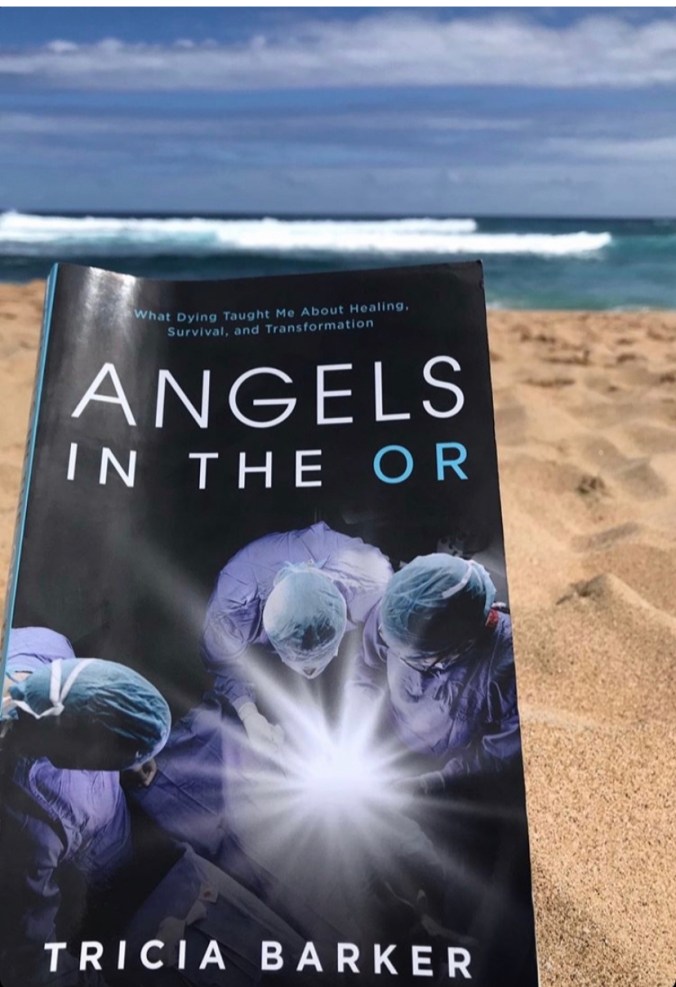
My memoir, Angels in the OR: What Dying Taught Me about Healing, Survival, and Transformation, explores the near-death experience that transformed my understanding of life, healing, and consciousness. More importantly, it explores what happened afterward. The experience itself lasted only a short time, but integrating it into everyday life has been a lifelong journey.


Being an NDE’er I have to say this article truly resonated with me. More than that, I think your article highlights and addresses issues and themes that many people think about regarding NDE’s.
This is a very informative and skillfully written piece. Thank you for posting this!
LikeLiked by 1 person
Thank you so much! I’m glad it spoke to you. I look forward to reading more of your work.
LikeLiked by 1 person
Inspiring story. I’m glad I stumbled across it. Thank you for sharing.
LikeLike
Thanks so much! I’m glad you stumbled upon my blog. I’ll check yours out too!
LikeLike